
Summer Internship (30 Days)
30-day Summer Training
Available Programmes:
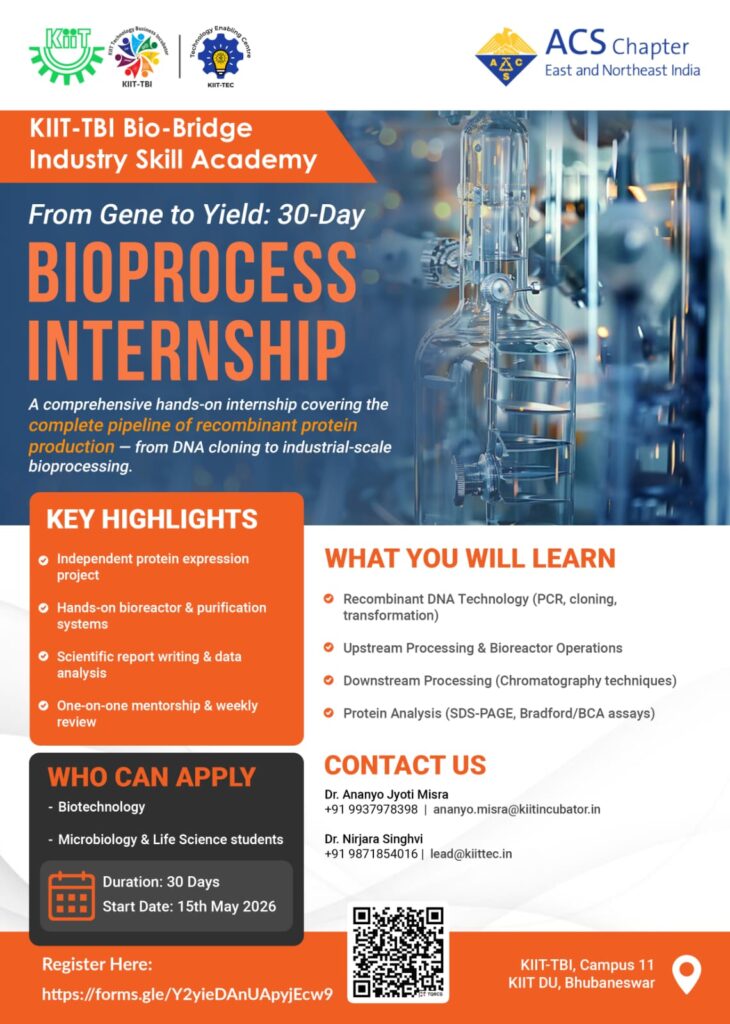
Bioprocess Engineering
A comprehensive, 30-day immersive internship designed to bridge the gap between foundational molecular biology and industrial-scale biomanufacturing. This program takes participants through the entire lifecycle of recombinant protein production - starting from raw DNA manipulation at the benchtop to the operational intricacies of bioreactors and advanced chromatography.
Each intern will be assigned an independent protein expression project (such as working with an antibacterial target or specific enzyme), culminating in a formal, structured scientific project report detailing their workflow, optimization strategies, and final yields.
🔹 Key Content & Training Modules:
Module 1: Recombinant DNA Technology (Cloning)
- Gene amplification (PCR) and Agarose Gel Electrophoresis.
- Restriction digestion, vector ligation, and competent cell preparation.
- Transformation and positive clone screening.
Module 2: Upstream Processing & Optimization
- Optimizing expression factors (temperature, pH, inducer concentration) in shake flasks.
- Bioreactor Operations: Hands-on assembly, probe calibration (pH, DO, Temp), inoculation, and running batch/fed-batch processes.
Module 3: Downstream Processing (Purification)
- Biomass harvesting, cell lysis, and lysate clarification.
- Chromatography: Hands-on protein purification using Affinity Chromatography (Capture) and Size Exclusion Chromatography (Polishing).
Practical Outcome
- Construct phylogenetic tree
- Identify virulence & resistance genes
- Perform pan-genome analysis
Module 4: Analytics & Validation
- Protein quantification using standard assays (Bradford/BCA & Spectrophotometry).
- Visualizing and validating protein expression and purity using SDS-PAGE.
Module 5: Independent Project & Scientific Report Writing
- Each intern executes an independent target-protein expression project.
- Data curation, yield calculation, and formatting chromatograms/gels.
- Drafting a final scientific report based on their specific project outcomes.
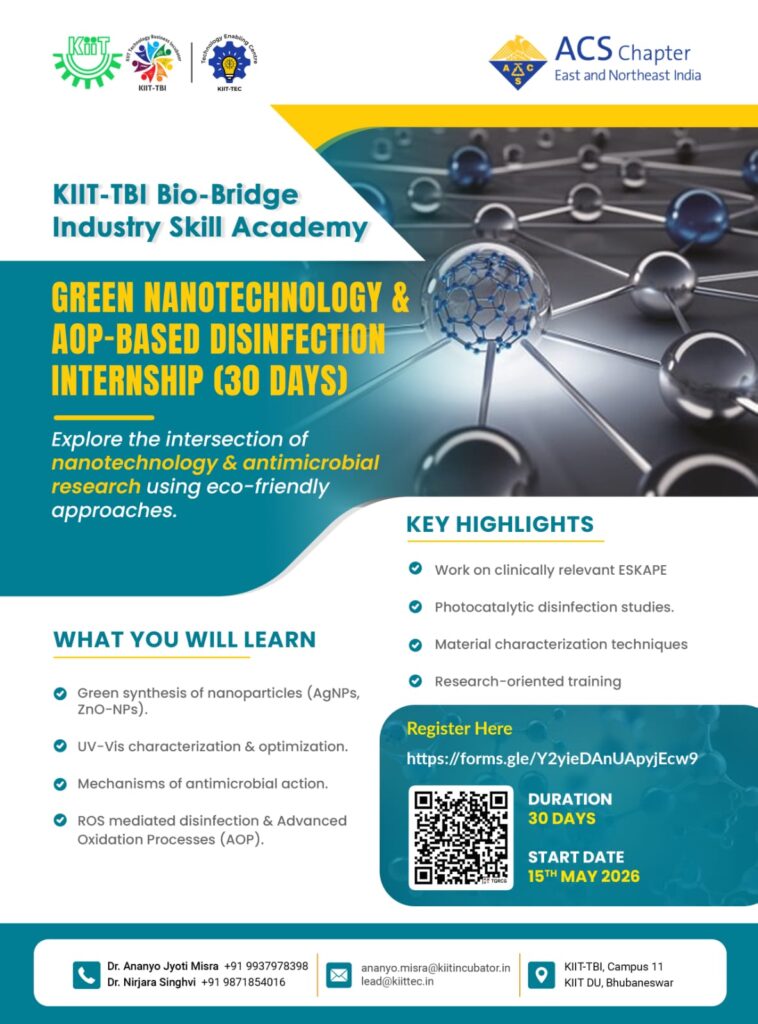
Green Nanotechnology & AOP-Mediated Disinfection Internship Program
Phytochemical Synthesis and Advanced Oxidation for Pathogen Control"
This intensive 30-day research program is designed to provide a comprehensive foundation in the green synthesis of nanoparticles and their application in combating multidimensional antibiotic resistance. Participants will transition from plant extraction to evaluating Reactive Oxygen Species (ROS) generation against the clinically critical ESKAPE pathogen panel.
🔹 Phase 1: Foundations & Synthesis (Week 1 – Week 2)
Module 1 : The AMR Landscape & AOP Principles: Understanding ESKAPE pathogen profiles and the theory of ROS generation via nanoparticles.
Module 2 : Botanical Extraction: Collection and authentication of Azadirachta indica (Neem) or Ocimum sanctum (Tulsi) for aqueous leaf extract preparation.
Module 3: Nanoparticle Synthesis: Green synthesis of AgNPs and ZnO-NPs using metal precursors and plant extracts.
Module 4: Optimization & Characterization: Utilizing UV-Vis (Cary 60) to monitor SPR peaks (~420 nm for AgNPs) and varying pH/temperature for optimal yield.
🔹 Phase 2: Antimicrobial Dynamics & Data Analysis ( Week 3 – Week 6)
Module 5 : Phenotypic Susceptibility: Executing Well Diffusion Assays (WDA) and determining Minimum Inhibitory Concentration (MIC) via broth microdilution.
Module 6 : Photocatalytic AOP Study: Investigating microbial disinfection under UV-A light (365 nm) to trigger membrane and DNA damage.
Module 7: Scientific Reporting: Statistical analysis (ANOVA/t-tests) and drafting dissertation-ready figures and discussion sections.
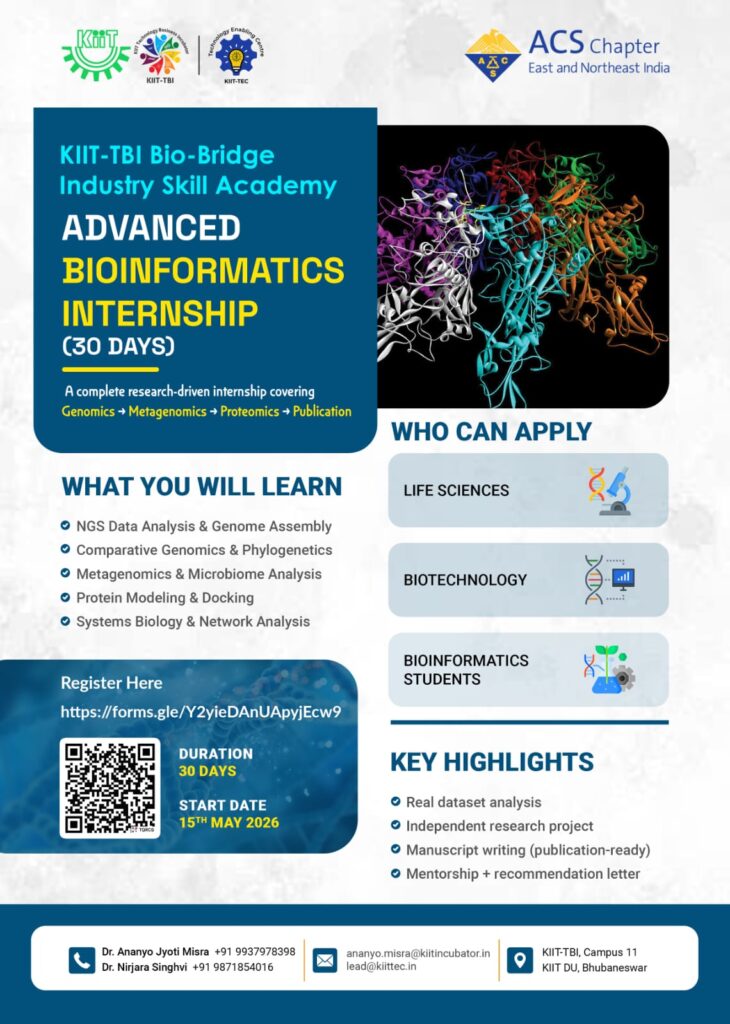
Advanced Bioinformatics
“From Omics Data to Publication: A Complete Research Journey”
Developed from the Advanced Bioinformatics Workshop Series, this internship provides a project-driven, end-to-end research experience covering Genomics → Comparative Genomics → Metagenomics → Proteomics, culminating in a publishable manuscript.
🔹 Phase 1: Foundation Training (Days 1–05)
Learning Modules
- Introduction to genomics & NGS
- Linux environment & bioinformatics tools
- Data quality control (FastQC, Trimmomatic)
- Genome assembly (reference & de novo)
- Genome annotation (BLAST, Prokka)
Practical Outcome
- Process raw sequencing dataset
- Perform genome assembly + annotation
🔹 Phase 2: Comparative Genomics & Evolution (Days 6–11)
Learning Modules
- Sequence alignment (MUSCLE, local/global)
- Phylogenetic analysis (single gene, core genome)
- ANI, AAI, dDDH heatmaps
- Pathogenomics & AMR analysis
- Pan-genome analysis
Practical Outcome
- Construct phylogenetic tree
- Identify virulence & resistance genes
- Perform pan-genome analysis
🔹 Phase 3: Metagenomics Analysis (Days 11–20)
Learning Modules
- Amplicon & shotgun metagenomics
- Data filtering & QC
- Diversity analysis (alpha/beta)
- Taxonomic profiling (MetaPhlAn)
- QIIME workflow
- Functional metagenomics
Practical Outcome
- Analyze microbiome dataset
- Generate diversity plots & taxonomic profiles
- Perform statistical analysis
🔹 Phase 4: Proteomics & Systems Biology (Days 20–30)
Learning Modules
- Protein modeling & validation
- Ramachandran plot analysis
- Protein docking
- Protein–protein interaction networks
- Cytoscape analysis (hub genes, modules)
Practical Outcome
- Model and validate protein structure
- Perform docking
- Construct PPI network
🔹 Phase 5: Project Development & Publication (Days 15–30)
Project Work
Participants will choose one integrated project:
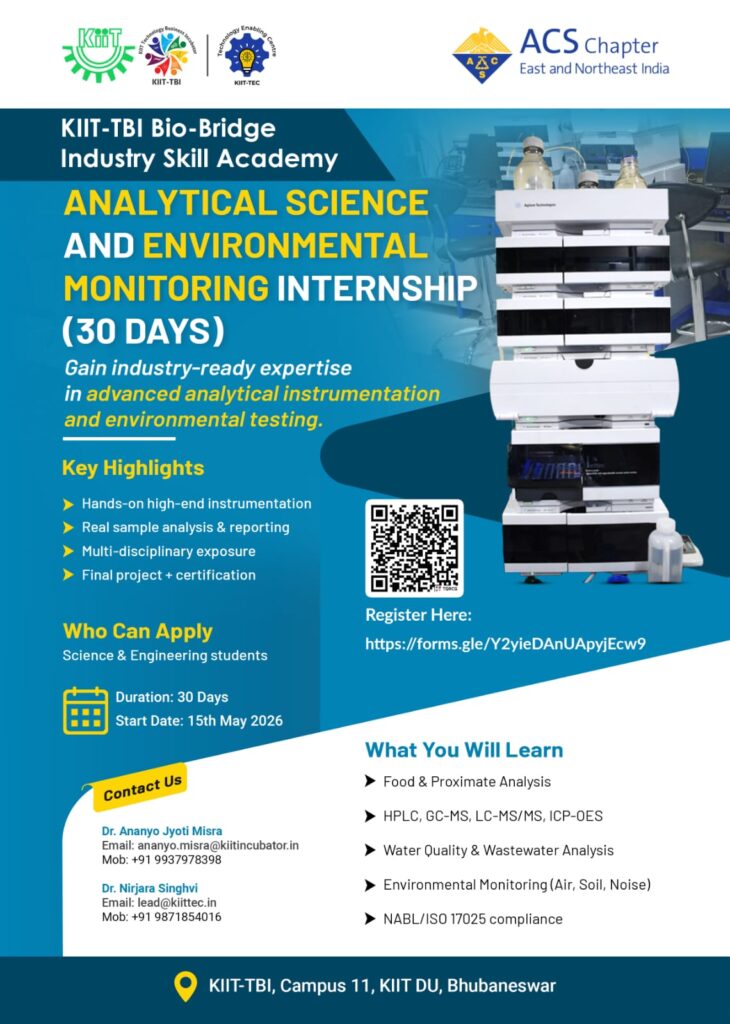
Analytical Science, Environmental Monitoring & Advanced Instrumentation
🔹 Phase 1: Foundation in Analytical Techniques
Focus Areas:- Proximate analysis (Moisture, Ash, Protein, Fat, Energy)
- Titrimetric techniques (Acidity analysis)
- UV-Vis Spectrophotometry (Curcumin analysis)
- Introduction to HPLC
🔹 Phase 2: Advanced Residue & Elemental Analysis
Focus Areas:- GC-MS and LC-MS/MS fundamentals
- Advanced extraction techniques (acidified clean-up, turbo evaporation)
- Multi-residue pesticide analysis
- ICP-OES for heavy metal detection
🔹 Phase 3: Water Quality & Wastewater Management
Focus Areas:- NABL/ISO 17025 compliance
- Physical parameters (pH, TDS, Conductivity, Turbidity)
- Titrimetric ion analysis
- Spectrometric analysis (Beer-Lambert Law)
- Wastewater parameters (COD, TSS, Oil & Grease)
🔹 Phase 4: Environmental Monitoring & Field Analysis
Focus Areas:- Air quality monitoring (PM10, PM2.5)
- Gaseous pollutant analysis (SO₂, NO₂)
- Noise monitoring and (L_{eq}) calculations
- Soil sampling and analysis
🔹 Phase 5: Project Work, Data Analysis & Reporting
Focus Areas:- Independent project execution
- Data integration from multiple instruments
- Report writing (NABL/ISO format)s
- Presentation and viva
30-day Summer Training
Available Programmes:
- Bioprocess Engineering
- Introduction to genomics & NGS
- Linux environment & bioinformatics tools
- Data quality control (FastQC, Trimmomatic)
- Genome assembly (reference & de novo)
- Genome annotation (BLAST, Prokka)
- Process raw sequencing dataset
- Perform genome assembly + annotation
- Sequence alignment (MUSCLE, local/global)
- Phylogenetic analysis (single gene, core genome)
- ANI, AAI, dDDH heatmaps
- Pathogenomics & AMR analysis
- Pan-genome analysis
- Construct phylogenetic tree
- Identify virulence & resistance genes
- Perform pan-genome analysis
- Amplicon & shotgun metagenomics
- Data filtering & QC
- Diversity analysis (alpha/beta)
- Taxonomic profiling (MetaPhlAn)
- QIIME workflow
- Functional metagenomics
- Analyze microbiome dataset
- Generate diversity plots & taxonomic profiles
- Perform statistical analysis
- Protein modeling & validation
- Ramachandran plot analysis
- Protein docking
- Protein–protein interaction networks
- Cytoscape analysis (hub genes, modules)
- Model and validate protein structure
- Perform docking
- Construct PPI network
- Analytical Science & Environmental Monitoring
Green Nanotechnology & AOP-Mediated Disinfection Internship Program
Phytochemical Synthesis and Advanced Oxidation for Pathogen Control"
This intensive 30-day research program is designed to provide a comprehensive foundation in the green synthesis of nanoparticles and their application in combating multidimensional antibiotic resistance. Participants will transition from plant extraction to evaluating Reactive Oxygen Species (ROS) generation against the clinically critical ESKAPE pathogen panel.
🔹 Phase 1: Foundations & Synthesis (Week 1 – Week 2)
Module 1 : The AMR Landscape & AOP Principles: Understanding ESKAPE pathogen profiles and the theory of ROS generation via nanoparticles. Module 2 : Botanical Extraction: Collection and authentication of Azadirachta indica (Neem) or Ocimum sanctum (Tulsi) for aqueous leaf extract preparation. Module 3: Nanoparticle Synthesis: Green synthesis of AgNPs and ZnO-NPs using metal precursors and plant extracts. Module 4: Optimization & Characterization: Utilizing UV-Vis (Cary 60) to monitor SPR peaks (~420 nm for AgNPs) and varying pH/temperature for optimal yield.🔹 Phase 2: Antimicrobial Dynamics & Data Analysis ( Week 3 – Week 6)
Module 5 : Phenotypic Susceptibility: Executing Well Diffusion Assays (WDA) and determining Minimum Inhibitory Concentration (MIC) via broth microdilution. Module 6 : Photocatalytic AOP Study: Investigating microbial disinfection under UV-A light (365 nm) to trigger membrane and DNA damage. Module 7: Scientific Reporting: Statistical analysis (ANOVA/t-tests) and drafting dissertation-ready figures and discussion sections.Advanced Bioinformatics
“From Omics Data to Publication: A Complete Research Journey”
Developed from the Advanced Bioinformatics Workshop Series, this internship provides a project-driven, end-to-end research experience covering Genomics → Comparative Genomics → Metagenomics → Proteomics, culminating in a publishable manuscript.
🔹 Phase 1: Foundation Training (Days 1–05)
Learning Modules
Practical Outcome
🔹 Phase 2: Comparative Genomics & Evolution (Days 6–11)
Learning Modules
Practical Outcome
🔹 Phase 3: Metagenomics Analysis (Days 11–20)
Learning Modules
Practical Outcome
🔹 Phase 4: Proteomics & Systems Biology (Days 20–30)
Learning Modules
Practical Outcome
🔹 Phase 5: Project Development & Publication (Days 15–30)
Project Work
Participants will choose one integrated project:
Contact for More Details
30-day Summer Training
Available Programmes:
- Bioprocess Engineering
- Introduction to genomics & NGS
- Linux environment & bioinformatics tools
- Data quality control (FastQC, Trimmomatic)
- Genome assembly (reference & de novo)
- Genome annotation (BLAST, Prokka)
- Process raw sequencing dataset
- Perform genome assembly + annotation
- Sequence alignment (MUSCLE, local/global)
- Phylogenetic analysis (single gene, core genome)
- ANI, AAI, dDDH heatmaps
- Pathogenomics & AMR analysis
- Pan-genome analysis
- Construct phylogenetic tree
- Identify virulence & resistance genes
- Perform pan-genome analysis
- Amplicon & shotgun metagenomics
- Data filtering & QC
- Diversity analysis (alpha/beta)
- Taxonomic profiling (MetaPhlAn)
- QIIME workflow
- Functional metagenomics
- Analyze microbiome dataset
- Generate diversity plots & taxonomic profiles
- Perform statistical analysis
- Protein modeling & validation
- Ramachandran plot analysis
- Protein docking
- Protein–protein interaction networks
- Cytoscape analysis (hub genes, modules)
- Model and validate protein structure
- Perform docking
- Construct PPI network
- Analytical Science & Environmental Monitoring
Green Nanotechnology & AOP-Mediated Disinfection Internship Program
Phytochemical Synthesis and Advanced Oxidation for Pathogen Control"
This intensive 30-day research program is designed to provide a comprehensive foundation in the green synthesis of nanoparticles and their application in combating multidimensional antibiotic resistance. Participants will transition from plant extraction to evaluating Reactive Oxygen Species (ROS) generation against the clinically critical ESKAPE pathogen panel.
🔹 Phase 1: Foundations & Synthesis (Week 1 – Week 2)
Module 1 : The AMR Landscape & AOP Principles: Understanding ESKAPE pathogen profiles and the theory of ROS generation via nanoparticles. Module 2 : Botanical Extraction: Collection and authentication of Azadirachta indica (Neem) or Ocimum sanctum (Tulsi) for aqueous leaf extract preparation. Module 3: Nanoparticle Synthesis: Green synthesis of AgNPs and ZnO-NPs using metal precursors and plant extracts. Module 4: Optimization & Characterization: Utilizing UV-Vis (Cary 60) to monitor SPR peaks (~420 nm for AgNPs) and varying pH/temperature for optimal yield.🔹 Phase 2: Antimicrobial Dynamics & Data Analysis ( Week 3 – Week 6)
Module 5 : Phenotypic Susceptibility: Executing Well Diffusion Assays (WDA) and determining Minimum Inhibitory Concentration (MIC) via broth microdilution. Module 6 : Photocatalytic AOP Study: Investigating microbial disinfection under UV-A light (365 nm) to trigger membrane and DNA damage. Module 7: Scientific Reporting: Statistical analysis (ANOVA/t-tests) and drafting dissertation-ready figures and discussion sections.Advanced Bioinformatics
“From Omics Data to Publication: A Complete Research Journey”
Developed from the Advanced Bioinformatics Workshop Series, this internship provides a project-driven, end-to-end research experience covering Genomics → Comparative Genomics → Metagenomics → Proteomics, culminating in a publishable manuscript.
🔹 Phase 1: Foundation Training (Days 1–05)
Learning Modules
Practical Outcome
🔹 Phase 2: Comparative Genomics & Evolution (Days 6–11)
Learning Modules
Practical Outcome
🔹 Phase 3: Metagenomics Analysis (Days 11–20)
Learning Modules
Practical Outcome
🔹 Phase 4: Proteomics & Systems Biology (Days 20–30)
Learning Modules
Practical Outcome
🔹 Phase 5: Project Development & Publication (Days 15–30)
Project Work
Participants will choose one integrated project: